🕒 12 min read · 📝 2232 words
Armageddon is the covenant process by which God purifies wayward believers, exposes hidden rebellion, governs the forces that discipline them, and raises them into Spirit‑animated resurrection life.
Daniel’s week, Ezekiel 38–39, Psalm 22, Revelation 20, and Colossians 3 all describe this same pattern: willful sin → delusion → exposure of the bones → burial → Spirit outpouring → resurrection life → witness to the nations.
Introduction
Armageddon is not a geopolitical conflict but an inner covenant process in which God purifies His wayward people and lifts them into the resurrected life (Romans 5:17) while they are still on the earth.
Just as Jesus was resurrected on earth before His ascension, He overthrows the hostile powers surrounding His followers and reveals His character to the nations through their Spirit‑empowered triumph.”
Scripture presents this pattern through multiple prophetic witnesses — Psalm 22, Ezekiel 38–39, Revelation 20, Daniel’s seventieth week, and Colossians 3:1–4 — each describing the same divine reality from a different angle.
Together they reveal a unified covenant process: God confronts His people, exposes the structures of disobedience, governs the forces that discipline them, and ultimately releases them into Spirit‑animated resurrection life.
The Lion’s Governance, Daniel’s 70th Week, and the Burial of the Bones
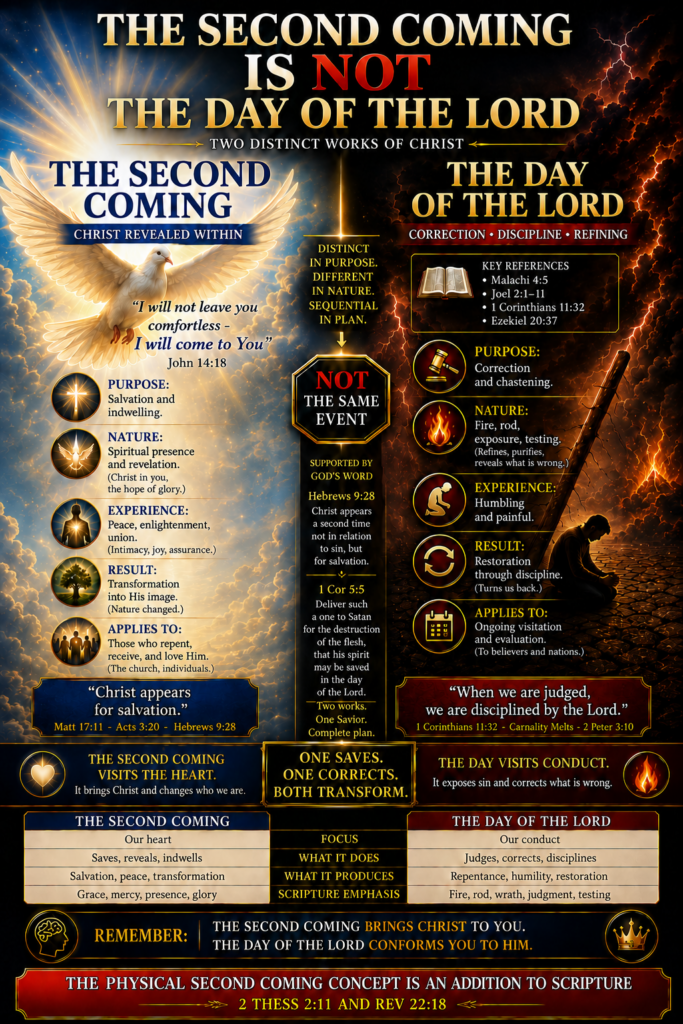
God uses evil for good, and the Lion of the tribe of Judah governs every disciplinary force released during the Day of the Lord.
Revelation shows that Jesus opens the seals and directs the beasts; they act only within the boundaries He sets for covenant discipline.
This same governance frames Daniel’s seventieth week — the covenant‑confirmation period in which God exposes and dismantles the structural supports of disobedience.
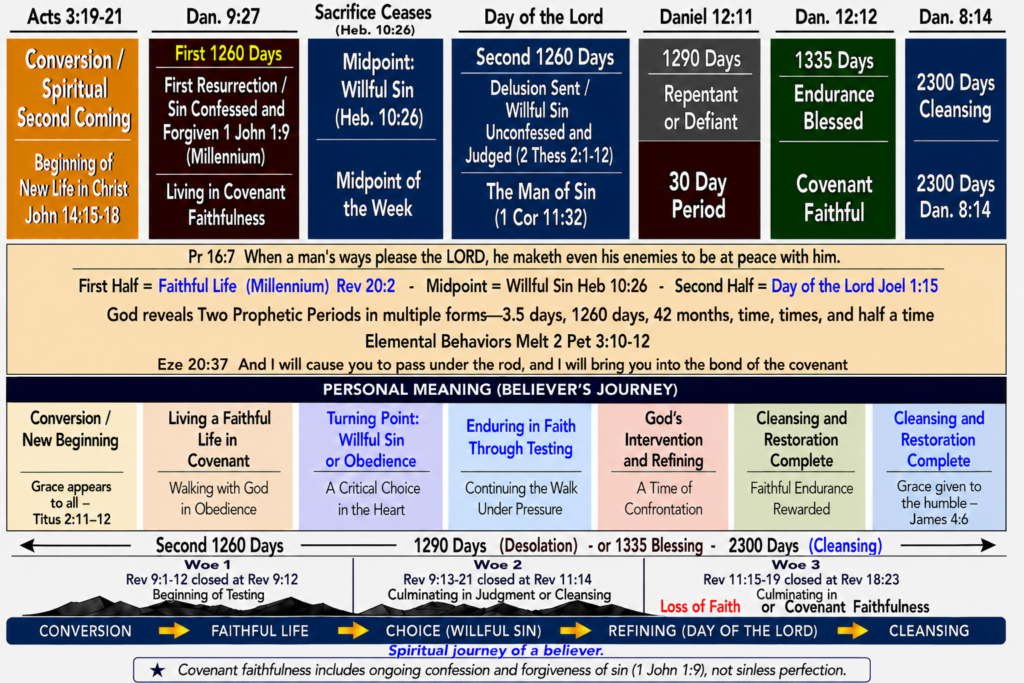
Daniel’s week divides into two covenant halves, 3½ and 3½ days, representing two phases in a believer’s life.
First 3½ Days — Devil Bound
This is the period in which the Devil is bound (Revelation 20:2).
The believer sins, confesses, and is cleansed according to 1 John 1:9.
Ordinary discipline operates. No delusion is needed. No surrounding enemies appear. The believer walks in forgiveness.
Second 3½ Days — Devil Unbound
This is the period in which the Devil is unbound.
The believer enters willful sin, resists conscience (Hebrews 10:26), and no longer recognizes the sin as sin.
At this point God sends delusion (2 Thessalonians 2:11), and the Day of the Lord begins.
Hostile powers surround the believer. Pressure increases.
The sinful activity gains temporary dominance. The “bones” of rebellion — the hidden structural supports of disobedience — are exposed.
This transition between halves is the moment Hebrews 10:26 describes — when conscience is resisted and ordinary sin becomes willful sin.
Delusion muffles conscience so the Lion can expose the bones and complete the covenant purification.
Why Delusion Comes Before Deliverance
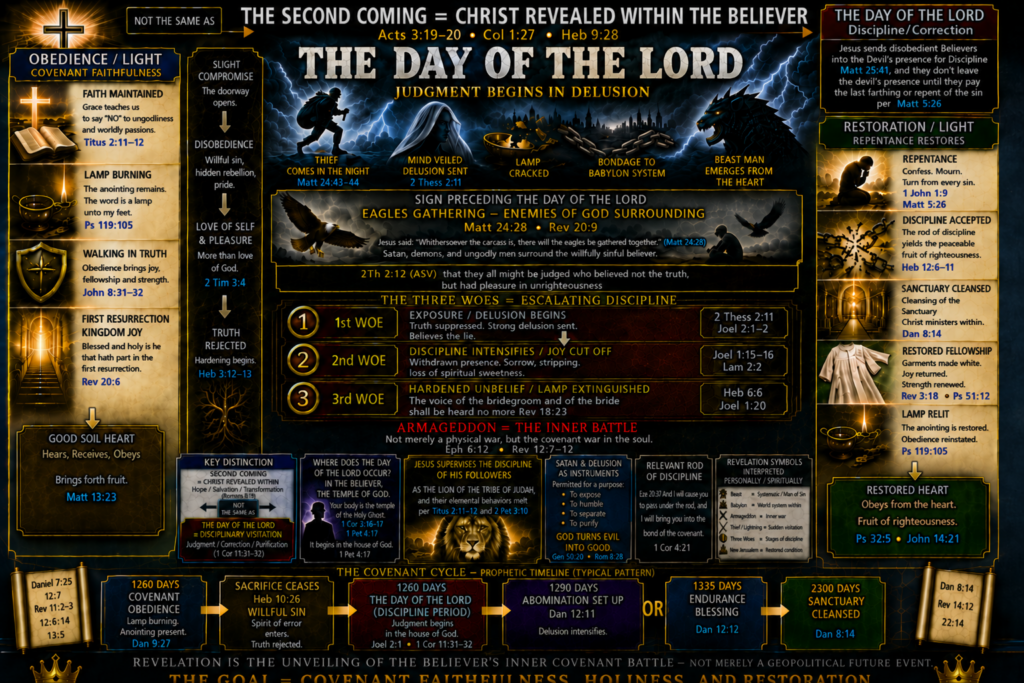
Delusion is not God abandoning the believer — it is God beginning the work of rescue.
When a believer enters willful sin and resists conscience, gentle conviction no longer reaches them.
They know the truth, but they choose against it.
If God does not intervene, the willful sin will harden into unbelief and extinguish the lamp of faith (Revelation 18:23).
When a person has faith, God’s grace can guide them to turn away from ungodly behavior — as long as they continue to hold on to their faith.
When God hides His face (Ezekiel 39:23–24), the believer loses the positive side of His presence — clarity, conviction, protection, guidance, and favor — and is left only with pressure, consequence, enemy activity, and the inner fog produced by willful sin (2 Cor 4:4).
This withdrawal opens the door to delusion: a smoke‑like narrowing of perception that muffles conscience and forces the believer to face the deeper “bones” of rebellion they have been avoiding.
When God hides His face, the believer loses the light of truth and becomes mentally exposed to the sinful construct formed by the Devil’s blinding, which makes the rebellion unmistakably visible.
Delusion ends lukewarmness by fixing the heart’s direction, making either purification or judgment possible.
At this point the believer must choose: hold on to their faith and seek forgiveness, or reject faith and allow the heart to harden.
Romans 1:28, Ezekiel 39, and 2 Thessalonians 2 describe this same covenant pattern: God hides His face, delusion solidifies the chosen path, and judgment becomes righteous because the choice is fully revealed.
Yet this judgment is corrective, not destructive.
Once the real issue is exposed, God intervenes — collapsing the enemy’s attack (Ezekiel 39:3) and restraining their hostility (Proverbs 16:7) — rescuing the believer when the heart is ready for restoration.
This delusion is God’s covenant response to willful sin in one of Jesus’ followers. It marks the beginning phase of the Day of the Lord, where God withdraws clarity so the believer’s faith‑choice becomes visible — either to hold on to faith and seek forgiveness (1 John 1:9) or to reject faith and harden the heart. This choice determines whether the coming pressure purifies or destroys.
This hardening process follows the Three Woes pattern: delusion begins the fall (Woe 1), pressure deepens and defends the sin (Woe 2), and continued resistance extinguishes the lamp of faith (Woe 3).
The Battle Is the Lord’s
Scripture says, “the battle is the Lord’s,” because God does not merely assist the believer — He takes over the conflict.
Delusion focuses the believer on the real issue, and God’s intervention removes the pressure once its purpose is complete.
Delusion is not the end of hope but the beginning of healing.
It is the doorway into purification, and deliverance is the moment God begins to bring the believer out of sin and into resurrection life.
The Bones: What God Is Actually Exposing
Ezekiel’s “seven months of burying the bones” describes the covenant transformation taking place beneath the surface.
Bones represent the hard structural framework of rebellion that remains after the flesh has been judged — the deep supports of disobedience that cannot be removed by ordinary conviction.
The seven‑month period symbolizes the complete covenant cycle in which these structures are identified, exposed, and removed.
Just as the Lion governs the seals and directs the beasts, He governs this burial process.
The Spirit‑given release of Ezekiel 39:29 parallels Jesus’ teaching in Matthew 5:26: the believer “comes out” only when the last measure of repentance has been produced and the final “bone” — the last structural support of disobedience — has been buried.
Daniel’s week, Ezekiel’s seven months, and the Lion’s governance of Revelation all describe the same covenant purification that raises God’s people into the resurrection life called the first resurrection (Colossians 3:1–4; Revelation 20:5).
When the Covenant Process Is Resisted in Totality
While delusion begins God’s rescue, Scripture also warns that this covenant process can be resisted in totality.
The Three Woes pattern shows that some believers respond to delusion and discipline with repentance, but others harden themselves at every stage.
When all corrective pressure is resisted — conscience, delusion, discipline, surrounding enemies, and God’s final intervention — the believer’s faith collapses.
This is the meaning of Revelation 18:23: “the light of a lamp will not shine in you anymore.” The lamp of faith goes out.
The Three Woes reveal both outcomes: purification for those who yield, and the loss of faith for those who resist the entire covenant process.
Psalm 22 and the Bulls of Bashan
When Jesus cried, “My God, My God, why have You forsaken Me?”, He invoked the entire context of Psalm 22, including the bulls of Bashan — symbolic of violent, encircling hostile powers.
This imagery matches Ezekiel 39:17–18’s great sacrificial feast where Gog’s “mighty ones” fall.
Jesus fulfilled this pattern in His crucifixion: surrounded by hostile powers, yet through His suffering God defeated the spiritual forces of Gog.
Psalm 22 and Ezekiel 39 were written centuries apart, yet Jesus Himself links them by invoking the Psalm from the cross.
The matching symbols reveal that God showed David and Ezekiel the same covenant event using different prophetic images.
Jesus’ use of Psalm 22 confirms that the suffering of the Servant and the destruction of Gog’s hosts are two sides of the same divine pattern.
Ezekiel 39:9–16 is not a second event but a retelling of the Gog conflict from a different angle.
The first telling shows the external battle, while the second reveals its covenant meaning — the burning of sinful supports and the burial of deep rebellion.
Hebrew prophecy often presents the same event twice to show both the visible action and the spiritual significance.
Ezekiel 38–39: God Leads His People Into Confrontation
Ezekiel 38–39 applies this pattern to God’s people.
They are willfully sinful, compromised, and spiritually distant — the symbolic “coastlands” of Ezekiel 39:6.
God sends purifying fire on them, not to destroy but to refine, just as He did with Israel in exile.
He then leads them into confrontation with Gog (Ezekiel 38:4), not because they are strong but because He intends to fight for them and through them.
Their weakness becomes the stage for His power. Ezekiel 39 retells the same event but emphasizes the burial of Gog’s mighty ones, the purifying fire, and the outpouring of the Spirit that raises God’s people into resurrection life.
The two chapters function like two angles of the same covenant moment — confrontation and cleansing.
The Collapse of Hostile Powers
Revelation 12:12 says Satan “has only a short time,” meaning his sphere of influence is collapsing.
This matches Ezekiel 39:17–18, where the fall of Gog’s mighty ones symbolizes the defeat of hostile powers, and echoes Genesis 3:14, where the serpent is sentenced to “eat dust” — to feed forever on defeat.
Hostile powers rage because their realm is falling apart under God’s judgment, even as their diminishing influence continues to serve God’s purpose of pressure, purifying, and forming His people.
The Coastlands: Wayward Believers Purified
The coastlands in Ezekiel 39:6 represent wayward believers living far from covenant faithfulness. They receive purifying fire, not judgment.
Their shame is removed (Ezekiel 39:26), their exile ends, and God pours out His Spirit on them (Ezekiel 39:29).
This purification is the doorway into resurrection life.
God’s Spirit comes in a pattern, not just a moment.
Israel was “baptized into Moses” through a journey of correction and guidance.
Acts 2 follows the same pattern: the flames of fire signify God forming His people.
Ezekiel’s promise of the Spirit is the Old Testament version of this same process.
Matthew 25:41 — The Purifying Fire for Sinful Believers
Jesus’ words in Matthew 25:41 describe not the damnation of unbelievers, but the purifying fire assigned to willfully sinful believers.
This fire matches Ezekiel 39:6, where God sends fire on the coastlands to cleanse them. Jesus explains in Matthew 5:26 that this fire is temporary — the believer “will not come out until” repentance is complete.
Because of judicial delusion (2 Thessalonians 2:11), believers may not perceive their need for purification, yet God governs the process for their restoration, just as He did with Job.
The First Resurrection: Colossians 3:1–4
Colossians 3:1–4 describes the first resurrection life believers enter now: they have died with Christ, been raised with Christ, and their life is hidden with Christ in God.
This is Spirit‑animated resurrection life on earth, just as Jesus Himself was resurrected on earth.
Ezekiel’s Spirit outpouring in 39:29 is the Old Testament expression of this same resurrection reality.
Armageddon: Surrounded Believers Enter Resurrection Life
Armageddon is the moment when sinful believers, surrounded and unable to save themselves, are empowered by God to enter resurrection life and triumph over Gog’s forces.
Revelation 20:8–9 shows the nations surrounding the beloved city, just as Psalm 22 shows the bulls of Bashan surrounding the righteous sufferer and Ezekiel 38 shows Gog surrounding the land of Israel.
In each case, God intervenes, purifies His people, and defeats the hostile powers.
The Second Purpose: Witness to Magog
Armageddon also serves a second purpose: through the resurrection‑empowered victory of His people, God reveals His enabling power to Magog and the unbelieving nations.
Ezekiel 38:16 states the purpose plainly: “so that the nations may know Me.”
God demonstrates that His people did not overcome by their own strength — they were weak, compromised, and surrounded — but by His Spirit.
Their victory becomes God’s witness to the world.
Conclusion
Armageddon reveals the covenant pattern by which God purifies, raises, and empowers His wayward people.
Jesus’ words in Matthew 25:41 show that the fire prepared for the devil becomes, for sinful believers, the purifying fire that cleanses rather than destroys.
Ezekiel 38–39 present this same covenant event from two angles: confrontation and cleansing.
Daniel’s week and Ezekiel’s seven months reveal the covenant timing and mechanics of purification.
Psalm 22 and Revelation 20 show the surrounded‑believer pattern fulfilled in Christ and repeated in His people.
Colossians 3 shows the resurrection life that results.
In this unified pattern, God’s wayward, surrounded believers are transformed into Spirit‑animated overcomers, and their victory becomes the revelation of God’s enabling power to all nations — a witness that invites recognition yet still requires the decision of faith.
2 Timothy 4:7 — “I have fought a good fight, I have finished my course, I have kept the faith.”
1 Peter 1:5 — “Who are kept by the power of God through faith unto salvation ready to be revealed in the last time.”