
🕒 7 min read · 📝 1230 words
Introduction
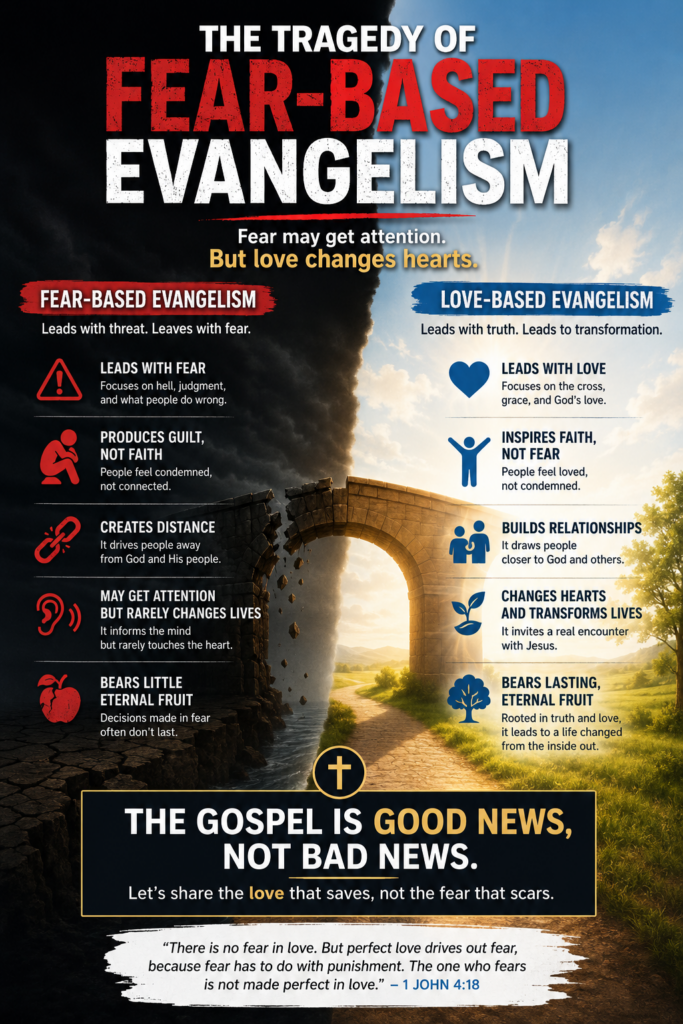
For generations, Christians have longed to share the gospel with urgency and passion. Many were sincere. Many were devoted. But over time, a tragic shift occurred: the message of good news became overshadowed by fear‑based warnings.
This page explores how that happened — and how Scripture reveals a God far more merciful than the fear‑driven systems of the past ever imagined.
- The Early Church: Evangelism Rooted in Life, Not Fear
The earliest Christians did not preach eternal conscious torment.
Their message centered on:
- resurrection
- transformation
- the kingdom of God breaking into the present
- the mercy and goodness of God
Judgment was real, but it was:
- earthly
- covenantal
- corrective
- tied to the Day of the LORD
Evangelism was an invitation into life, not a threat of endless suffering.
- The Shift: When Greek Philosophy Reshaped Christian Thought
As Christianity spread into the Greek world, new ideas began shaping Christian doctrine — especially the belief that the soul is inherently immortal.
If the soul cannot die, then:
- “perish” cannot mean perish
- “death” cannot mean death
- “destruction” cannot mean destruction
This philosophical assumption forced theologians to reinterpret biblical judgment into something eternal and conscious, even though Scripture never describes it that way.
This is where fear first entered the gospel.
- The Medieval Church: Fear as a Tool of Control
During the medieval period, fear became a powerful instrument.
Preachers used:
- graphic images of fire
- depictions of demons
- threats of eternal torment
The goal was often:
- obedience
- conformity
- institutional loyalty
Fear‑based evangelism became effective — but shallow.
- Revivalism: Sincere but Misguided Zeal
The revival movements of the 1700s–1900s inherited the eternal‑torment model and preached it with passion.
They believed:
- people were moments away from eternal torture
- fear was necessary to save them
- emotional urgency was essential
Their motives were sincere.
Their theology was inherited.
Their methods were shaped by fear.
This is how fear‑based evangelism became normal in the modern era.
- The Tragedy: A God Who Appeared Cruel
Fear‑based preaching unintentionally created a God who:
- tortures forever
- sustains existence only to punish
- demands belief under threat
- resembles a tyrant more than a Father
This distorted the character of God for generations.
It produced Christians who were:
- anxious
- insecure
- afraid of God
- unsure of salvation
Fear converts the emotions, not the heart.
- The Biblical Reality: Judgment Is Measured, Just, and Merciful
Scripture presents a very different picture:
- Unbelievers live full lives under God’s mercy.
- They die without torment.
- They return to non‑existence.
- They never become aware of what they refused.
- They reap what they sow (Obad 1:15).
- Believers experience judgment that is tempered, not destructive (1 Cor 11:32).
- The Day of the LORD is:
- corrective
- covenant‑confirming
- governed by Christ
This is a God who is just, merciful, and consistent — not cruel.
- Why Fear‑Based Evangelism Fails
Fear can:
- shock
- frighten
- pressure
- manipulate
But it cannot:
- transform
- renew
- cleanse
- produce spiritual life
Fear creates decisions.
Truth creates disciples.
- The Sadness and the Hope
It is sobering to see how many generations preached a distorted message out of sincere but misguided zeal.
It is sobering to see how many people rejected Christianity because the God they were shown looked monstrous.
But there is hope.
The mercy of God is clearer now than ever.
The truth of Scripture is rising again.
And the gospel is returning to what it always was:
An invitation into life, not a threat of eternal fire.
Conclusion
Fear‑based evangelism was born from misunderstanding, not malice.
But Scripture reveals a God whose judgments are measured, whose mercy is wide, and whose call is rooted in love, not terror.
As Christians recover the truth, we recover the beauty of the gospel — and the character of the God who gave it.
Introduction –
Throughout Christian history, believers have tried to warn the world about judgment. Many were sincere. Many were passionate. But over time, the message shifted from good news to fear‑driven urgency.
This page traces how that happened — and how Scripture reveals a God far more merciful than the fear‑based systems of the past ever imagined.
- The Early Church: Evangelism Without Fear
The earliest Christians did not preach eternal conscious torment. Their message centered on:
- resurrection
- transformation
- the kingdom breaking into the present
- the mercy and goodness of God
Judgment was real, but it was:
- earthly
- covenantal
- corrective
- tied to the Day of the LORD
The gospel was always an invitation into life — never a threat of endless suffering.
- When Greek Philosophy Entered Christian Thought
As Christianity spread into the Greek world, new ideas began shaping Christian doctrine — especially the belief that the soul is inherently immortal.
If the soul cannot die, then:
- “perish” cannot mean perish
- “death” cannot mean death
- “destruction” cannot mean destruction
This philosophical assumption forced theologians to reinterpret biblical judgment into something eternal and conscious, even though Scripture never describes it that way.
This was the moment fear first crept into the gospel message.
- The Medieval Church: Fear as a Tool
During the medieval era, fear became a tool — not always intentionally, but effectively.
Graphic depictions of fire, demons, and eternal torment shaped the imagination of Europe.
The goal was often:
- obedience
- conformity
- institutional loyalty
Fear worked, but it produced shallow conversions and distorted the character of God.
- Revivalism: Sincere but Misguided Zeal
The revival movements inherited the eternal‑torment framework and preached it with urgency.
They believed people stood seconds away from unending agony, so fear became their fuel.
Their passion was sincere.
Their theology was inherited.
Their methods were shaped by terror rather than truth.
This is how fear‑based evangelism became normal in the modern era.
- The Tragedy: A God Who Looked Cruel
Fear‑driven preaching unintentionally created a God who:
- tortures forever
- sustains existence only to punish
- demands belief under threat
- resembles a tyrant more than a Father
This distorted the character of God for generations.
It produced Christians who were:
- anxious
- insecure
- afraid of God
- unsure of salvation
Fear can stir emotions, but it cannot transform the heart.
- The Biblical Reality: Judgment That Is Just and Measured
Scripture presents judgment as just, measured, and covenantal — never sadistic.
- Unbelievers live under God’s mercy.
- They die without torment.
- They return to non‑existence.
- They reap what they sow (Obad 1:15).
- Believers experience discipline that is corrective, not destructive (1 Cor 11:32).
- The Day of the LORD is governed by Christ, rooted in covenant, and aimed at restoration.
This is a God who is just, merciful, and consistent — not cruel.
- Why Fear‑Based Evangelism Fails
Fear can:
- shock
- frighten
- pressure
- manipulate
But it cannot:
- renew
- cleanse
- transform
- produce spiritual life
The gospel calls us into life — not into terror, not into fire.
Truth creates disciples.
- The Sadness and the Hope
It is sobering to realize how many generations preached a distorted message out of sincere zeal.
Many rejected Christianity because the God they were shown looked monstrous.
Yet hope remains.
The mercy of God is rising again.
The truth of Scripture is becoming clear.
And the gospel is returning to its original beauty — an invitation into life.
Conclusion –
Fear‑driven evangelism grew out of misunderstanding, not malice.
But Scripture reveals a God whose judgments are measured, whose mercy is wide, and whose call is rooted in love, not terror.
As Christians recover the truth, we recover the beauty of the gospel — and the character of the God who gave it.