
🕒 8 min read · 📝 1592 words
🔐 Christ Holds the Keys — Sovereign Over Your Journey
Keep in mind that we are told what the Mystery of Godliness is in Col 1:27
This book is called the Revelation of Jesus Christ.
So the book then illustrates how Jesus is revealed in the believer.
God’s grace teaches us to deny ungodliness, Titus 2:11 -12.
2 Corinthians 3:18 (RSV) And we all, with unveiled face, beholding the glory of the Lord, are being changed into his likeness from one degree of glory to another; for this comes from the Lord who is the Spirit.
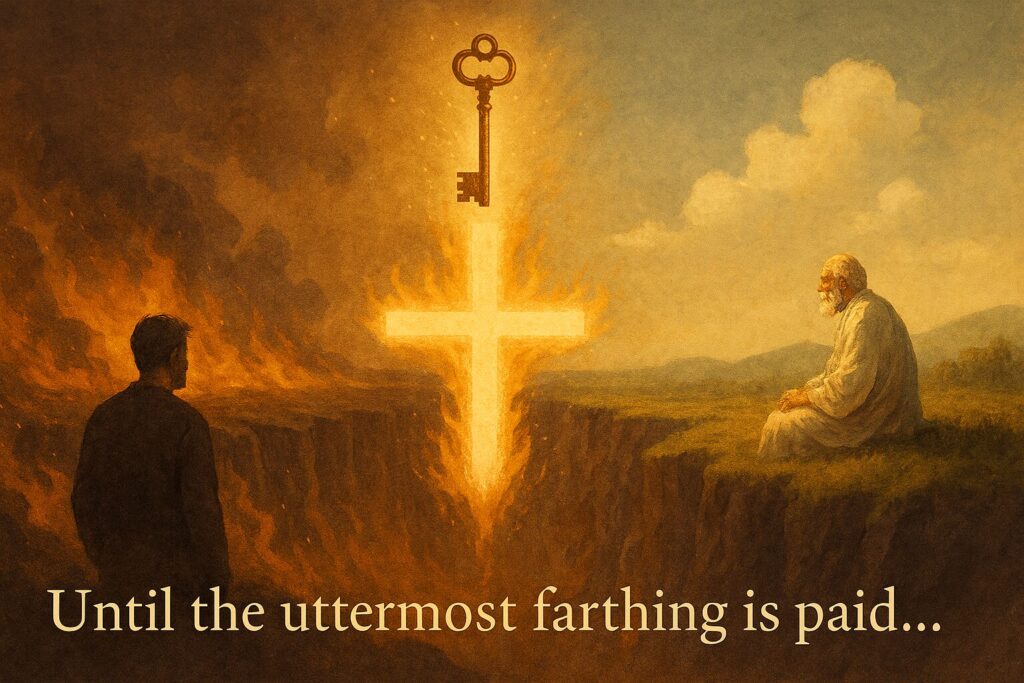
In Revelation 1:18, Jesus asserts His authority over death and Hades, emphasizing a judicial rather than symbolic significance. For believers, this means that Christ alone governs the measured release of divine judgment in their lives.
He holds the scroll entrusted to Him, guiding the disciplines (Proverbs 16:7) that lead to the purification of His followers (Revelation 5:5).
✨ Summary: Revelation as a Personal Journey of Refinement
Christ, holding the keys of death and Hades (Rev 1:18), sovereignly governs every trial, judgment, and release symbolized in the book of Revelation, and thus in the believer’s life.
The seals are not distant events but divine instruments Jesus uses to awaken and refine His people, Rev 5:9.
🔐 Revelation: A Personal Journey of Refinement
Jesus holds the keys of death and Hades (Rev 1:18)—He alone governs the believer’s journey.
The seals of Revelation are not distant events but divine tools used to awaken, discipline, and restore.
When God’s people commit willful sin (The abomination leading to desolation, Matt 24:15), God allows the believer to fall away (2 Thess 2:3), using the Devil to influence them to believe a lie (2 Thess 2:8,11), as Job did in his self-righteousness (Job 32:1 and Job 42:6).
This delusion is not abandonment—it is covenant purification, Titus 2:11-12 and Heb 13:5.
The fire descends (Matt 25:41), melting the earthly carnal behavior within (2 Pet 3:10).
The obedient flee to the mountain (Matt 24:16), separating themselves from the impending judgment of disobedient believers, and interceding for the fallen.
As Ezekiel 36:37 affirms, God will be “inquired of” to restore His people.
We must pray for backslidden believers to be increased “like a flock, Jn 17:9 and 1 Jn 5:18-19.”
Only after correction can we again fellowship with the formerly disobedient believers “meeting them in the air” (1 Thess 4:15–17).
This command from Jesus does not mean we cant fellowship with sinful believrs – it simply means that if they sin knowing that the activity is a sin we dont fellowship with them even if they call themselves Christians. We do this in obedience to the many commands in the Bible to come out from among them so we will not partake of their plagues – Matt:24:15 Mark 13:14 and Rev 18:4.
The concept of the “Day of the Lord” purifying the believer of sinful behavior is concealed in parables and woven throughout Scripture. It reveals how God uses the adversary to teach His people to deny ungodliness (Joel 1:15 and Titus 2:11–12).
The outcome is guaranteed: grace will finish what it began.
📊 The Day of the Lord: A Cycle of Restoration
🔍 The Great Gulf: A Present-Tense Judgment
This isn’t a story about the workings of the afterlife, but a wake-up call. The judgment, like the separation of sheep and goats, takes place here in this life.
1. Permission Granted God allows the Willfully sinful believer to fall or believe a lie (This is the “Day” Coming as a thief)→ 2 Thess 2:8,11; Job 41:34 and Job 42:6 → To expose hidden pride or self-righteousness
2. Judgment Initiated Fire descends (Mt 24:51; the carnal earthly behavior melts → 2 Pet 3:10; Rev 6–8 → To purify the believer through tribulation, Jn 16:33, Rev 7:14.
3. Separation of the Obedient Faithful flee to the mountain → Matt 24:16; Ezek 9 → To avoid delusion (2 Thess 2:11) and intercede for others
4. Intercession & Enquiry The faithful pray for the restoration of the Backslidden → Ezek 36:37; Luke 22:32 → To fulfill God’s promise to increase His flock
5. Revelation & Awakening The fallen believer is restored Matt 5:26 and Luke 12:59 → Rev 3:18–20; → To return in humility and renewed faith
6. Reunion in the Air Fellowship is restored after correction → 1 Thess 4 15–17 → To rejoin the purified body of Christ in this earthly lifetime
1Th 4:15 (MKJV) For we say this to you by the Word of [the] Lord, that we who are alive [and] remain until the coming of the Lord (Remain in the presence of the Lord) shall not go before those who are asleep (willfully sinful).
1Th 4:16 For the Lord himself shall descend from heaven with a shout (2nd Peter 3:10) , with the voice of the archangel, and with the trump of God: and the dead in Christ shall rise first (per Col 3:1)
1Th 4:17 (MKJV) Then we who are alive [and] remain (have remained obedient) shall be caught up together with them in the clouds, to meet the Lord in the air. And so we shall ever be with the Lord.
Here is another clarifying translation which further interprets/explains the parable or message in tongues Paul has spoken in 1Th 4:17 (BBE) Then we who are still living will be taken up together with them into the clouds (Spirit) to see the Lord in the air: and so will we be for ever with the Lord.
7. Grace Sustains The believer walks in power to deny ungodliness → Titus 2 11–12 → James 4:6 -To glorify God through transformed obedience
The Lazarus account conceals this present-tense spiritual reality.
Abraham’s calling Lazarus “son” tells us that Lazarus was a believer.
Lazarus was a believer who was alive.
The Bible teaches that being born again is not merely “starting over”—it is a death and resurrection event. The “death” is specifically a death to:
- the old self
- the world’s values
- the flesh
- the former way of life
And the “birth” is the Spirit’s creation of a new person 2 Cor 5:17.
Jesus was referring to this type of death in the parable of the Rich Man and Lazarus.
The great gulf is spiritual, exists between obedient faith and hellfire, Lk 16:26.
Biblical warnings against seeking messages from the dead suggest that both Lazarus and the rich man were physically alive and Abraham was also spiritually alive.
Jesus would not have cited this occurence if it illustrated Abraham communicating with the dead, Deut 18:10-12 and Isaiah 8:19. Abraham would not have spoken to the Rich man if He were literally dead.
The rich man, however, was not partaking of the Kingdom of God at the time Rom 14:17 and Joel 1:16.
He was in the torment of fire, which Jesus delivers willfully sinful believers into in Matt 25:41.
This is the battle in the Valley of Decision/Jehoshaphat (Joel 3:14), it is the Battle of Armageddon (Rev 16:16).
Mt 24:51 And shall cut him asunder, and appoint him his portion with the hypocrites: there shall be weeping and gnashing of teeth.
Lu 12:46 The lord of that servant will come in a day when he looketh not for him, and at an hour when he is not aware, and will cut him in sunder, and will appoint him his portion with the unbelievers.
Joe 3:12 Let the heathen be wakened, and come up to the valley of Jehoshaphat: for there will I sit to judge all the heathen round about.
(KJV)
Like the sheep and goats, the judgment unfolds now during this present lifetime.
This is another example of the hidden concept of the “Day of the Lord” being used as a symbol of restoration.
Eze 39:7 (ASV) And my holy name will I make known in the midst of my people Israel; neither will I suffer my holy name to be profaned any more: and the nations shall know that I am Jehovah, the Holy One in Israel.
Eze 39:8 (ESV) ¶ Behold, it is coming and it will be brought about, says the Lord GOD. That is the day of which I have spoken.
A concise summary of Revelation’s inner drama
Concise Summary (Refined)
The Book of Revelation unveils the seals, trumpets, and bowls as three movements of God’s corrective wrath toward the man of sin (2 Thessalonians 2)—the whore/beast‑man (666) who symbolizes the backslidden believer resisting Christ’s voice. The seals establish the fence or parameters of judgment, the trumpets function as God’s announcements and warnings, and the bowls represent the cup of wrath fully implemented and personally experienced. These judgments are not external geopolitical events but the inward discipline God employs to reclaim an errant covenant‑member. Revelation 18:23 depicts the terrifying moment when the voice of the Bridegroom and Bride ceases, while the descent of the New Jerusalem portrays the believer being overtaken by Christ’s increasing presence. Every person ultimately dwells either in the intensifying presence of Jesus or in the deepening influence of the Dragon. This dynamic fulfills Jesus’ parable of the wheat and tares, which grow together until the end of faith (Rev 18:23) and the believer attains the goal of salvation (1 Peter 1:9).
Revelation portrays the seals, trumpets, and bowls as God’s escalating discipline upon the man of sin within the backslidden believer, until either the voice of Christ ceases or the New Jerusalem descends, fulfilling Jesus’ command to let wheat and tares mature together until the believer reaches the end of faith and the goal of salvation. This time of judgment is referred to as the Day of the Lord in Joel 1:15.
In Revelation, the seals, trumpets, and bowls represent God’s increasing discipline on the man of sin within a believer who has fallen away, continuing until either Christ’s voice is silenced or the New Jerusalem arrives. This fulfills Jesus’ command to let the wheat and tares grow together until the believer reaches the end of faith and the ultimate goal of salvation. Joel 1:15 refers to this period of judgment as the Day of the Lord.